

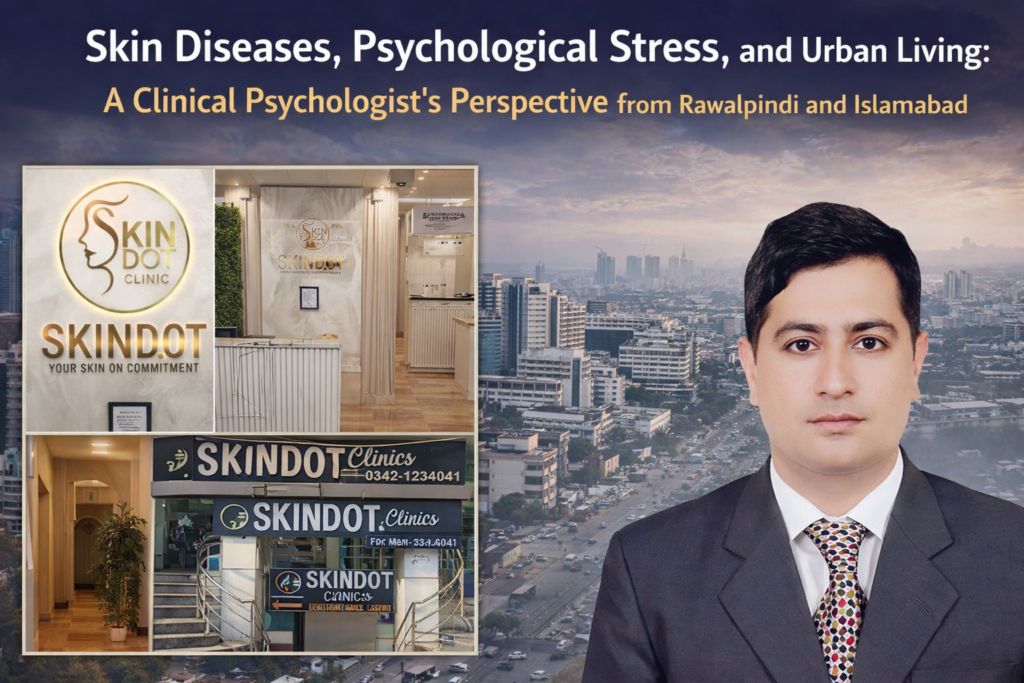
Psy Hassan Imran PhD Scholar Clinical Psychologist at SkinDot Clinics
SkinDot Clinics : Holistic Care for Skin & Mental Health
A Clinical Psychologist’s Perspective from Rawalpindi and Islamabad
By Hassan Imran, PhD Scholar
Clinical Psychologist at SkinDot Clinics
Skin Problems Are Rarely Just Skin-Deep
In urban centers such as Islamabad and Rawalpindi, skin diseases are among the most common reasons people seek medical care. While patients often present with visible concerns such as acne, eczema, psoriasis, hair loss, pigmentation, or chronic itching, the psychological burden associated with these conditions is frequently overlooked.
As a clinical psychologist working closely with dermatology teams at SkinDot Clinics (SkinDot Clinics ), I routinely observe that emotional stress, anxiety, and low mood not only coexist with skin disease but actively influence its onset, severity, and persistence. At the same time, living with a visible or chronic skin condition can significantly affect self-esteem, confidence, and social functioning.
The Brain–Skin Connection: A Scientific Reality
The connection between mental health and skin health is well established in medical science. The skin and nervous system share a common embryological origin, which explains why emotional states can directly affect skin function.
Psychological stress activates the hypothalamic–pituitary–adrenal (HPA) axis, leading to:
- Increased cortisol and inflammatory responses
- Disruption of the skin barrier
- Delayed healing
- Worsening of itching, redness, and flare-ups
In clinical practice, many patients report that their skin symptoms worsen during periods of academic pressure, work stress, family conflict, or prolonged uncertainty—stressors that are particularly common in urban living.
Urban Living in Rawalpindi and Islamabad as a Risk Factor
Modern urban lifestyles contribute to both psychological strain and dermatological problems. Common contributing factors include:
- Air pollution, dust, and traffic exposure
- Noise pollution and overcrowding
- Long working hours and sedentary routines
- Excessive screen time and social media comparison
- Poor sleep quality and irregular daily schedules
These factors create a cycle in which psychological stress worsens skin disease, and visible skin disease further increases emotional distress, leading to chronic or recurrent symptoms.
Psychological Impact of Visible Skin Conditions
From a mental health perspective, visible skin conditions can have a profound impact on daily life. Patients frequently experience:
- Social anxiety and fear of judgment
- Avoidance of social gatherings or professional interactions
- Reduced self-confidence and body image dissatisfaction
- Depressive symptoms and emotional withdrawal
- Strain in personal and family relationships
Many patients express that the emotional distress caused by how others perceive their skin is more painful than the physical symptoms themselves. These reactions are clinically significant and deserve attention.
Why Treating the Skin Alone Is Often Not Enough
While dermatological treatment is essential, focusing only on the physical aspect of skin disease may result in incomplete improvement or frequent relapse. Psychological stress can reduce treatment adherence, intensify symptoms, and interfere with recovery.
An integrated approach leads to better outcomes and includes:
- Accurate dermatological diagnosis and treatment
- Psychological assessment for stress, anxiety, or depression
- Counseling to improve coping skills and emotional regulation
- Behavioral strategies to manage scratching or skin-picking habits
- Support for self-esteem and body image concerns
This collaborative model improves long-term disease control, patient satisfaction, and overall quality of life.
Integrated Psychological Care at SkinDot Clinics
At SkinDot Clinics (Our Website ), mental health professionals work alongside dermatologists to address both the physical and psychological dimensions of skin disease. This holistic approach reflects an evidence-based understanding that mental well-being is an essential component of medical care.
Addressing emotional stress and psychological vulnerabilities helps patients respond better to treatment, reduces relapse rates, and supports lasting recovery.
Psychological Education Beyond the Clinic
In addition to clinical work, psychological education plays a vital role in improving mental health awareness and reducing stigma. Platforms such as Psychological Vibes (Psychological Vibes ) provide evidence-based information on mental health, coping strategies, and emotional well-being, complementing clinical care and empowering individuals to better understand their psychological health.
Conclusion
Skin disease in urban environments is best understood through a biopsychosocial lens, where biological, psychological, and environmental factors interact. Addressing psychological health is not an optional addition—it is a core component of ethical, effective, and patient-centered dermatological care.
Supporting the mind alongside the skin allows healing to be more complete, sustainable, and meaningful.
About the Author
Hassan Imran is a Clinical Psychologist dedicated to helping individuals improve their mental well-being through evidence-based psychological care. With a compassionate and client-centered approach, he works with adults and adolescents to address anxiety, depression, stress, trauma, and interpersonal difficulties.
He integrates psychological assessment, psychotherapy, and practical coping strategies to support lasting emotional growth and resilience. He is committed to ethical practice, continuous learning, and creating a safe, supportive space for healing and self-understanding.
He practices as a Clinical Psychologist at SkinDot Clinics Islamabad and contributes to mental health education through Psychological Vibes. Learn more about integrated dermatology and wellbeing services at SkinDot Clinics Islamabad:
https://skindotclinics.com/ .For More Information about Hassan Imran Visit Clinical Psychologist Hassan Imran | SkinDot Clinics Islamabad
Mental Health Guidance & Counseling
Chat directly with Hassan Imran
Consultant Clinical Psychologist
SkinDot Clinics – PWD Branch
Learn more Psychodermatology In Islamabad – Dermatologist-Led Mind–Skin Care At SkinDot Clinics
Visit our home page SkinDot Clinics
Tayyeba Ahmed – Consultant Clinical Psychologist | SkinDot Clinics Islamabad