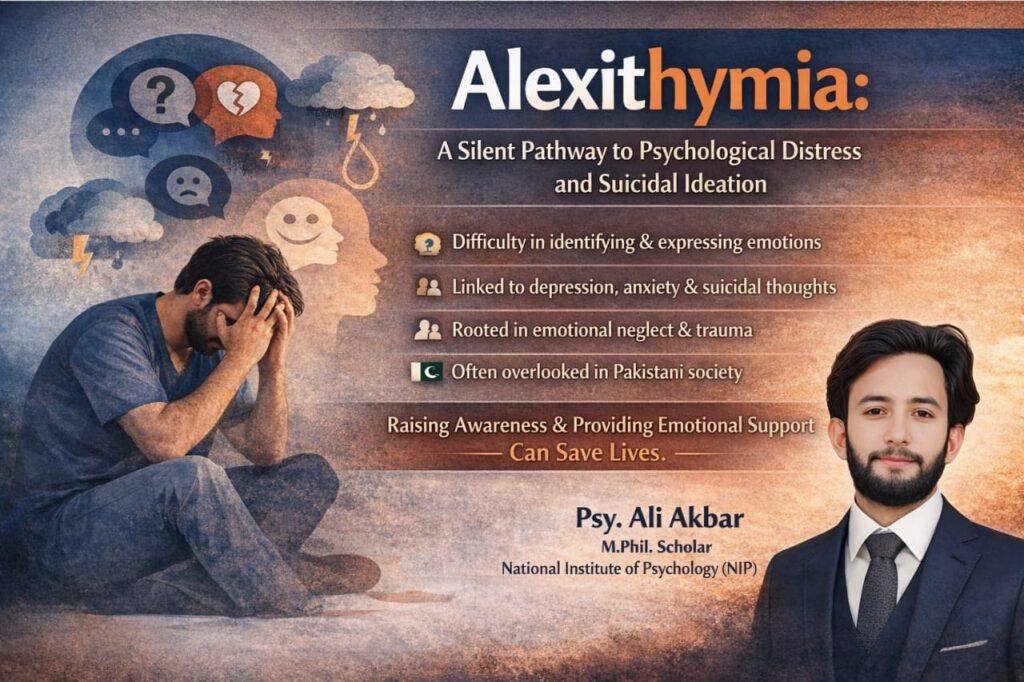
Alexithymia
A Silent Pathway to Psychological Distress and Suicidal Ideation
Mental health problems often develop quietly, without clear warning signs. One such overlooked psychological factor is alexithymia, a condition characterised by difficulty in identifying, understanding, and expressing emotions. Although it is not a mental disorder, alexithymia plays a significant role in emotional suffering and is strongly associated with psychological distress and suicidal ideation.
Reasons behind Alexithymia
Alexithymia often develops due to early emotional neglect, trauma, or environments where emotional expression is discouraged. Individuals with this trait experience emotions but are unable to label or communicate them effectively. As a result, emotional tension remains unresolved and gradually transforms into chronic stress, anxiety, depressive symptoms, and emotional numbness. Many individuals present with physical complaints rather than emotional concerns, making the underlying psychological issue difficult to detect.
Alexithymia and Suicidal Ideation
Psychological distress becomes more severe when emotions are suppressed rather than processed. People with alexithymia often feel overwhelmed without understanding why, which increases feelings of helplessness and isolation. Over time, this unrecognised emotional pain can lead to hopelessness and, in severe cases, suicidal ideation. Since such individuals struggle to express inner suffering, warning signs are frequently missed by family members and healthcare professionals.
Clinical Importance in the Pakistani Population
In Pakistani society, where emotional expression is often stigmatized and mental health awareness is limited, alexithymia remains largely unrecognized. Cultural expectations of emotional restraint, particularly among men, further increase the risk of silent psychological distress. Identifying alexithymia in clinical settings is therefore essential, especially in patients presenting with persistent distress, unexplained physical symptoms, or depression resistant to treatment.
Solution
Addressing alexithymia through emotional awareness, psychotherapy, and mental health education can significantly reduce psychological distress and suicidal risk. Helping individuals recognize and express emotions is not merely therapeutic; it is a critical step toward psychological well-being and suicide prevention.
About Author
Psy. Ali Akbar
M.Phil. Scholar
National Institute of Psychology (NIP)