

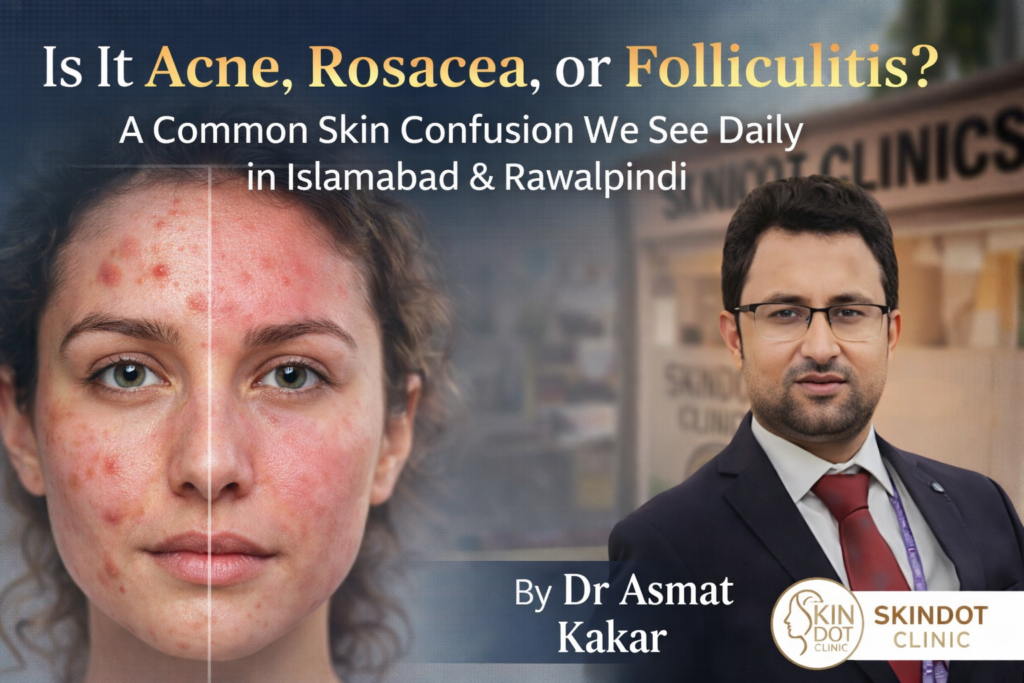
Dr Asmat Kakar Consultant Dermatologist
Not Every Pimple Is Acne
“Doctor, I have been treating my acne for months, but nothing is working.”
This is one of the most common statements we hear from patients visiting dermatology clinics in Islamabad and Rawalpindi. Many have already tried multiple creams, antibiotics, peels, or even laser sessions—yet their skin keeps flaring.
In a large number of cases, the problem is not that the treatment failed.
The real issue is that the condition was never acne to begin with.
Several skin conditions look very similar on the surface but behave very differently. The three most commonly confused conditions are acne, rosacea, and folliculitis.
Understanding the difference can completely change treatment outcomes.
“All Pimples Are Acne” — A Costly Assumption
From a patient’s point of view, any red bump or pustule on the face feels like acne. That assumption is understandable—but medically, it is often incorrect.
In our local setting, this confusion leads to:
- prolonged use of steroid-mixed creams
- repeated antibiotic courses without proper diagnosis
- worsening redness and sensitivity
- frustration and loss of trust in treatment
Let’s break this down in simple terms.
When It Is Actually Acne
Acne is a chronic inflammatory condition involving oil glands and hair follicles. It commonly affects teenagers and adults in Islamabad and Rawalpindi, influenced by hormonal changes, stress, diet, pollution, and lifestyle.
Typical acne features include:
- blackheads and whiteheads
- inflamed pimples or cysts
- oiliness
- gradual improvement with structured treatment
Acne requires patience and consistency. It does not resolve overnight, but with the correct medical plan, it is very manageable.
When It Is Rosacea (Often Missed in Adults)
Many adults—especially in their late 20s, 30s, and 40s—are treated repeatedly for acne when they actually have rosacea.
Clues that suggest rosacea:
- persistent facial redness
- flushing with heat, stress, tea, or spicy food
- burning or stinging rather than pain
- absence of blackheads
In Islamabad’s climate, rosacea often worsens with heat and sun exposure. Unfortunately, steroid creams or harsh acne products may give temporary relief but cause long-term damage, making redness and sensitivity worse over time.
When It Is Folliculitis (Not Acne at All)
Folliculitis is inflammation or infection of hair follicles and may be bacterial or fungal in nature.
It often presents as:
- itchy, uniform-looking bumps
- sudden flare-ups
- involvement of beard area, scalp, chest, or back
- worsening with sweating or occlusive products
Treating folliculitis with acne-only medications frequently fails because infection control, not oil reduction, is the key.
Why Skin Treatments Often Fail
This is an honest conversation we have daily with patients at SkinDot Clinics Islamabad.
Most treatments fail because:
- the diagnosis was assumed, not confirmed
- symptoms were treated instead of the root cause
- steroid creams masked the condition temporarily
- expectations and timelines were unrealistic
When the wrong condition is treated—even correctly—the skin will not improve.
How Dermatologists Approach This Differently
A dermatologist’s role is to differentiate conditions that look similar but behave differently.
This involves:
- careful clinical examination
- understanding previous treatments and responses
- identifying lifestyle and environmental triggers common in Rawalpindi and Islamabad
- planning treatment in realistic stages
This approach reduces unnecessary medications, procedures, and long-term skin damage.
When Should You Seek a Dermatologist?
Consider specialist evaluation if:
- your acne is not improving despite treatment
- redness, burning, or flushing is prominent
- steroid creams help briefly but worsen the problem later
- the condition keeps recurring
Early diagnosis leads to safer, faster, and more sustainable results.
Final Thoughts
Not every pimple is acne.
Not every flare-up needs stronger medication.
In cities like Islamabad and Rawalpindi, where self-medication and steroid misuse are common, accurate diagnosis is the most powerful treatment tool.
Understanding your skin condition properly makes treatment simpler, safer, and far more effective.
To learn more about dermatology services or to book an appointment, visit:
SkinDot Clinics
About the Author
Dr Asmat Kakar is a consultant dermatologist and aesthetic physician with FCPS (Dermatology). He is a visiting dermatologist at SkinDot Clinics Islamabad – Khanna Pull branch, where he provides consultant-led care for medical and aesthetic skin conditions.
Dr Asmat has formal training in aesthetic dermatology and hair restoration procedures, with clinical experience in both hospital-based dermatology departments and aesthetic clinics. His clinical interests include acne and inflammatory skin disorders, pigmentary conditions, rosacea, laser dermatology, and minimally invasive aesthetic procedures.
He strongly believes in accurate diagnosis, patient education, and evidence-based treatment planning to achieve safe, ethical, and long-term skin health outcomes.
Professional profile:
Dr Asmat Kakar on LinkedIn
Related Services Medical Dermatology Treatments in Islamabad – Dermatologist-Led Care at SkinDot Clinics
Get SkinDot Clinics Updates on WhatsApp
Join our official WhatsApp Channel for clinic updates, dermatologist-approved skin care tips, and important announcements.
Join WhatsApp Channel One-way updates only. No spam. Leave anytime.Related Services
Rosacea Awareness in Islamabad (Every April Awareness Month) | SkinDot Clinics
Rosacea Treatment in Islamabad | SkinDot Clinics
Internationally Trained Aesthetic Physicians in Islamabad | SkinDot Clinics
Dermatologist for Patients from Rawalakot Azad Kashmir | SkinDot Clinics Islamabad